What Is Kajukenbo? A Conversation About Fighting, Tradition, and Evolution
Ask ten Kajukenbo practitioners what Kajukenbo is and you might get ten different answers. That sounds like a problem. But after sitting down with John Hackleman, Ron, and Rob for an episode of Social Gelo with Angelo, I came away thinking that might actually be the point. The textbook explanation is easy. Kajukenbo was developed in Hawaii as a hybrid martial art combining elements of Karate, Judo and Jiu-Jitsu, Kenpo, and Boxing. But that still doesn't really answer the question.
What is Kajukenbo?
That was the question I put to the panel. Ron gave perhaps the simplest answer of the entire interview:
"It's not a style, but a mindset."
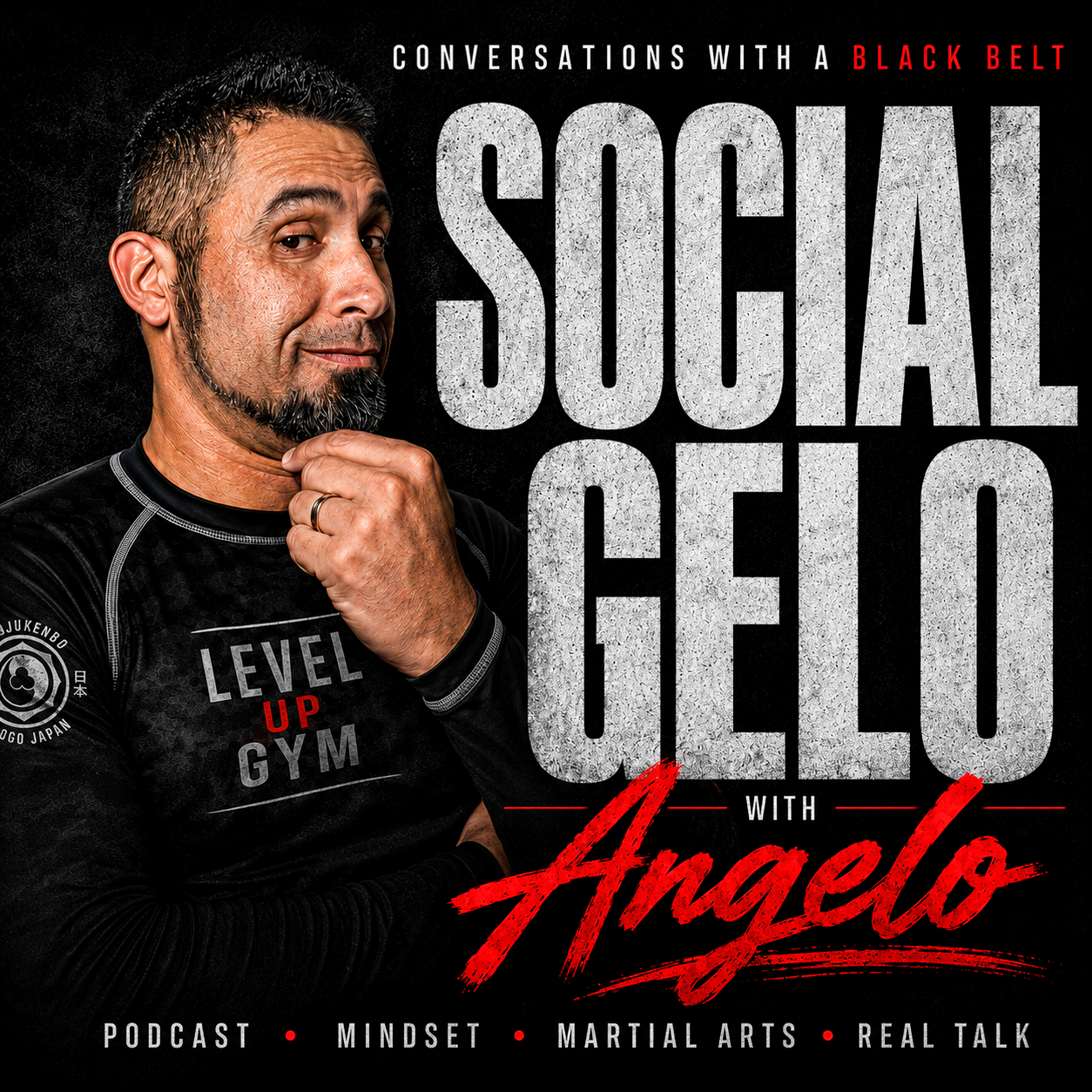
Angelo Ferrer - Social Gelo
He explained that Kajukenbo has curriculum, and different branches certainly have their own curriculum, but the system has always allowed considerable freedom in how individual instructors express it. John Hackleman, who grew up training Kajukenbo in Hawaii, agreed with the idea of a mindset but described that mindset in much rougher terms.
"It was a very violent mindset."
John's memories of Kajukenbo weren't of a polished commercial martial arts school. He described an environment filled with tough people who actually fought and who expected what they practiced in the studio to work outside of it. He summed up much of the old mentality simply:
"Hit fast and hit hard."
Rob took the concept another step.
"I think Kajukenbo is a philosophy."
For him, the philosophy was about meeting violence decisively. Technically, he described Kajukenbo as drawing its striking primarily from Karate, Kenpo, and Boxing, its grappling from Judo and Jiu-Jitsu, and other areas from the various influences that entered different Kajukenbo branches over time. But the collection of techniques wasn't the most important part. The mindset was.
## My Introduction to Kajukenbo
My own introduction to Kajukenbo happened for many of the same reasons. I grew up in a rough area in North County San Diego. There were gangs, people getting jumped, and plenty of violence. Before I ever joined a martial arts school, my friends and I were basically running our own little fight club. I read books about boxing, bought sparring equipment, and we fought. When I eventually started visiting martial arts schools, there was one question I always asked: When do we spar? Most schools told me I had to wait. Two months. Three months. Maybe six months. Sometimes there was a contract involved before I could even find out whether what they taught worked under pressure. Kajukenbo was different. I walked in and asked when I could spar. The answer was basically: Friday. Sign a waiver and get in there. So I did. I got my ass kicked by a brown belt named Mike Shaw. And I've been doing Kajukenbo ever since. For me, that experience said more about Kajukenbo than the acronym ever could.
## Kajukenbo Was Built Around Fighting
One thing became obvious during the interview. Despite everyone coming from different generations and different branches, fighting kept appearing in every description of Kajukenbo. John talked about growing up in Hawaii and using Kajukenbo to survive the environment around him.
"It saved me at a time where I needed saving."
Training gave him confidence going into rough schools and situations where fighting was a real possibility. He also described something that would probably horrify many modern martial arts parents. When kids wanted to fight at school, he started inviting them to his house to settle things through sparring instead.
"You guys want to fight, you come to my house Friday night and we're going to spar."
Then afterward, they were expected to make up. The culture was undeniably rough. But underneath the craziness was something important. Kajukenbo wasn't theoretical. People expected to test it. My own instructor had a similar mentality. We had forms and traditional curriculum, but what he cared about most was self-defense and fighting. There was a lot of sparring. And I mean a lot.
"Sparring, sparring, sparring, sparring, sparring."
The rules were loose and the training could get rough. Sometimes too rough. But the objective was never mysterious. Learn how to fight.
## Does Hard Training Mean Beating People Up?
This is where I think modern Kajukenbo has an important decision to make. There's a tendency to romanticize old-school martial arts training. People got injured. People trained on hard floors. People got knocked out. Students sometimes went to the hospital. That doesn't automatically mean the training was better. Rob made one of the most important points of the conversation:
"Hard training, I don't think, has to mean beating your students up to the point that they bleed."
Hard training can mean intense conditioning. It can mean sparring. It can mean an extremely fast-paced class. It can mean drilling under fatigue and pressure. And it can still be enjoyable. Rob pointed out that if students are constantly injured and miserable, they're eventually going to leave and do something else. He compared that experience to someone going down the street to Jiu-Jitsu where they can roll regularly, develop skills, and actually enjoy themselves. His point was simple:
"A student's entertainment and engagement level is probably the most important thing."
John agreed that some of the old methods don't need to survive.
"I don't think you have to get punched in the face anymore."
Coming from someone who described students going to the emergency room regularly during earlier periods of his training, that's significant. But John was equally adamant that removing unnecessary damage cannot mean removing intensity. For him, the thing that absolutely must remain hard is conditioning.
"Conditioning has to be super hard."
His reasoning is practical. You can look fantastic hitting pads while you're relaxed. You can throw beautiful combinations when your heart rate is normal. But what happens when you're exhausted? What happens after the adrenaline dump? What happens after someone hits you? John summed it up with a simple analogy:
"If it doesn't have any gas, it's not going anywhere."
In fact, conditioning became so important to his approach that he described it this way:
"Conditioning is my kata."
Rather than measuring progress primarily through the number of forms someone has memorized, he wants every belt to represent a person becoming physically more capable and harder to break. His goal is straightforward:
"I want them to be safer each belt."
That idea might be one of the best descriptions of what progression in a practical martial art should actually mean.
## The Kata Question
Of course, once you start talking about Kajukenbo, eventually someone is going to bring up kata. John doesn't hide his feelings about it. He hated kata when he was young. After earning his black belt and eventually developing Hawaiian Kempo, he removed the forms from his curriculum. But here's where the discussion became interesting. John didn't remove kata because he wanted to distance himself from Kajukenbo. He believed he was preserving what he considered the most important part of Kajukenbo.
"I wanted to stay true to Kajukenbo."
He kept the fighting mentality. He kept the conditioning. He kept the Kajukenbo lineage. He kept the philosophy of hitting hard and training for real-world violence. But he removed choreographed material that he didn't believe deserved the same amount of training time. At the same time, John felt that removing those recognizable parts of the curriculum meant he shouldn't simply continue calling what he taught Kajukenbo. So he called it Hawaiian Kempo.
"I thought I'd be a phony Kajukenbo guy."
Ron challenged that idea. His response was essentially that the forms themselves weren't necessarily what originally defined Kajukenbo.
"The katas weren't there originally, and it was still Kajukenbo."
And that creates an interesting problem. If the original Kajukenbo practitioners changed the system, when exactly were the rest of us supposed to stop changing it?
## Kajukenbo Is Not MMA
Another subject that came up was the popular claim that Kajukenbo was the first MMA. I understand why people say it. Kajukenbo was mixing martial arts decades before modern MMA became a sport. But John made an important distinction.
"MMA is a specific sport."
That matters. Mixed Martial Arts today means something specific. It has a competition environment and a ruleset. Kajukenbo combined martial arts, but that doesn't mean traditional Kajukenbo was the same thing as modern MMA. As John joked, dropping an old-school Kajukenbo practitioner into an MMA fight could create some serious rule problems because techniques intended for unrestricted self-defense aren't necessarily legal in the cage. The more interesting question isn't whether Kajukenbo can claim to have invented MMA. It's what Kajukenbo can learn from MMA. And I think the answer is obvious. A lot.
## MMA Gives Kajukenbo a Laboratory
One of my favorite parts of the interview came when John talked about how his own curriculum evolved through working with fighters. Instead of arguing theoretically about whether something worked, he could test it. He could give a fighter a technique and essentially say:
"Try this in your next fight. See if this works."
That's beautiful. Because that's almost exactly how Kajukenbo was created. Experiment. Pressure test. Observe the result. Adjust. John described his fighters as something close to a laboratory:
"It's the acid test."
His approach to takedown defense is a perfect example. John was an elite striker. When he opened his first gym and allowed extremely open sparring, something happened. People didn't want to stand there and kickbox with him. They tried to take him down. So he started developing his takedown defense. Not because somebody told him it belonged in the official curriculum. Because reality told him he needed it. That's Kajukenbo.
## Pressure Testing Should Matter More Than Nostalgia
This is where I think a lot of traditional martial arts get themselves into trouble. They confuse preservation with stagnation. If Kajukenbo had been created by people who refused to learn anything outside of their existing systems, Kajukenbo wouldn't exist. The entire art exists because martial artists from different backgrounds exchanged information and tried to create something that worked better. Today we have access to information they didn't have. Brazilian Jiu-Jitsu has transformed ground fighting. Modern wrestling has become deeply integrated with striking. Boxing and kickboxing continue to evolve. And MMA has given us decades of footage showing trained people combining striking, wrestling, and submissions against fully resisting opponents. Why would Kajukenbo ignore that? If something improves your ability to fight, Kajukenbo should at least be willing to look at it. That doesn't mean turning Kajukenbo into MMA. It means maintaining the same experimental mentality that created Kajukenbo in the first place.
## Kajukenbo Also Has a Business Problem
There's another issue that has influenced Kajukenbo over the years. Martial arts schools are businesses. Rob talked about watching his instructor temporarily emphasize what looked like "MMA in a gi" after Fight Quest created interest in Kajukenbo. There were sprawls, boxing combinations, low kicks, and Jiu-Jitsu. Later, as public interest changed, the school moved back toward more traditional material. Rob put the business reality plainly:
"Martial arts is a business like any other."
If nobody walks through the door, the school eventually disappears. That pressure can influence curriculum. I saw something similar in my own Kajukenbo experience. When programs moved from rougher neighborhoods into more affluent recreational centers, expectations changed. Some parents wanted less fighting and more traditional-looking martial arts. And programs adapt to the customers paying the bills. But Rob also shared an experience that challenges the assumption that parents necessarily want softer training. At one school, parents were actually asking instructors to make the training more practical. One mother whose child was being bullied complained that forms and flexibility training weren't solving the problem. Her basic question was:
When is my kid going to learn how to defend himself?
That's a question every martial arts instructor advertising "self-defense" should be prepared to answer.
## Kajukenbo Has a Branding Problem Too
Then there's another uncomfortable reality. Most people have no idea what Kajukenbo is. Living in Japan makes that painfully obvious. People know karate. People know judo. They know Brazilian Jiu-Jitsu. They increasingly know MMA. Kajukenbo? Usually nothing. Ron told a story that perfectly illustrates the problem. He changed the name of a Kajukenbo program to simply "Karate."
"I tripled my enrollment."
Same instructor. Same program. Different word. People understood what karate meant. They didn't understand Kajukenbo. Rob suggested that Kajukenbo instructors may need to become more comfortable using descriptions such as Kaju Karate or Kaju Self-Defense so people immediately understand what is being offered. That doesn't mean abandoning the Kajukenbo name. It means getting people through the door so you have the opportunity to teach them what Kajukenbo actually is.
## Tradition Still Has a Place
Interestingly, even John, who removed large amounts of traditional curriculum, talked about bringing some traditions back. One example was the Kajukenbo prayer. A student wanted to reintroduce it. John agreed. And people liked it. Why? Because martial arts are about more than punching someone. People want toughness, but many also want discipline, community, identity, and a moral framework for what they're learning. John described people wanting something that makes them:
"Stronger, tougher, but also more on a moral high ground."
That's worth preserving. Traditional practices can connect students to the generations that came before them. But preserving history doesn't require pretending that every old training method is equally valuable. We can keep the traditions that give Kajukenbo identity while continuing to question the techniques and training methods we use to prepare people for violence.
## So What Is the Future of Kajukenbo?
I actually had a final question prepared for the panel:
What should the future of Kajukenbo be?
By the time we reached the end of the conversation, I realized they had already answered it. I summed it up like this:
"Have fun. Make sure it keeps some of those roots of kicking ass."
That includes conditioning. It includes fighting. It includes pressure. But it doesn't require destroying students. John gave an even simpler formula:
"Make it fun. Keep it effective. Boom."
As ridiculous as it sounds, four martial artists spent more than an hour arguing about Kajukenbo and somehow arrived at something that simple. Maybe that's the answer.
## Kajukenbo Is the Process
Kajukenbo probably shouldn't look exactly like it did in 1947. The world has changed. Combat sports have changed. Our understanding of grappling has changed. Our understanding of training, conditioning, and injury has changed. But the reason Kajukenbo existed in 1947 doesn't have to change. Build people who can fight. Build people who can protect themselves. Condition them physically and mentally. Pressure test what you're teaching. Take useful information wherever you find it. Discard what doesn't work. Keep what does. And continue experimenting. Because maybe Kajukenbo was never supposed to be one frozen collection of techniques. Maybe Kajukenbo is the process itself. Ron called it a mindset. Rob called it a philosophy. John demonstrated it through a lifetime of changing his training whenever fighting exposed a weakness. And my own introduction to Kajukenbo came down to one thing. I asked when I could spar. They said Friday. That, more than any acronym, might explain what Kajukenbo is.
Train it. Test it. Find out if it works. Then keep evolving.